
New to PhenoMe or Python
Learn the basics with almost no code.
- Getting started (install + first script)
- 01 Interactive quickstart
- Learning paths
PhenoMe is a reproducible phenotyping pipeline built around three ideas:
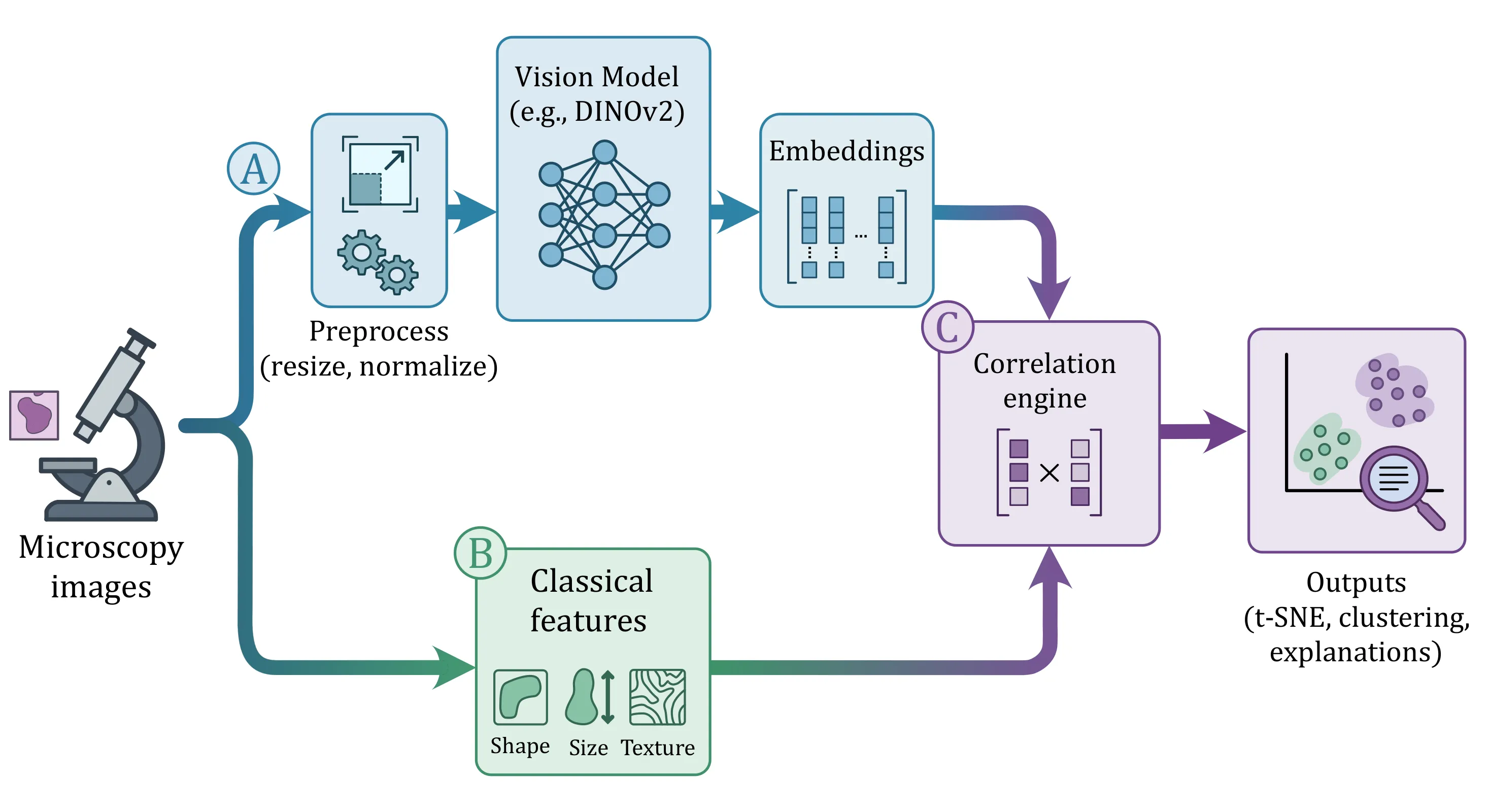
PhenoMe follows a modular 4-step workflow:
The same four steps underpin every workflow. Everything else (interactive exploration, extension hooks, etc.) plugs into that backbone.
Pick the card that matches you best. Each path ends at the same core idea: install, point at data, run notebooks or code, and understand your results.
New to PhenoMe or Python
Learn the basics with almost no code.
Ready to Use Your Own Images
Clean and organize data, then plot results.
Developer or Integrator
Extend or embed PhenoMe into your pipeline.
Advanced Concepts
Deepen your understanding of embeddings and how to explain AI results.